The beneficial effects of meditation begin within minutes

Feeling a little run-down? Try chanting, yoga or meditation. These techniques can boost the activity of genes involved in several processes beneficial to health, and they only take a few minutes each day to show results. Previous studies have reported changes to the brain while people practise these activities, but a new study shows for the first time that gene activity changes too. This could explain the reported beneficial effects of meditation, yoga and prayer.
ganeshasmallercopy

“It’s not New Age nonsense,” says Herbert Benson of the Massachusetts General Hospital in Boston. He and his colleagues analysed the gene profiles of 26 volunteers – none of whom regularly meditate – before teaching them a relaxation routine lasting 10 to 20 minutes. It included reciting words, breathing exercises and attempts to exclude everyday thought.

After eight weeks of performing the technique daily, the volunteers gene profile was analysed again. Clusters of important beneficial genes had become more active and harmful ones less so.
sand
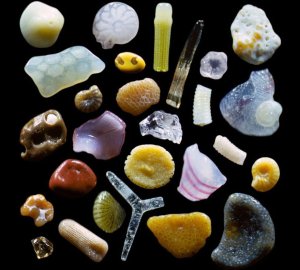
Sand, under a microscope.

The boosted genes had three main beneficial effects: improving the efficiency of mitochondria, the powerhouse of cells; boosting insulin production, which improves control of blood sugar; and preventing the depletion of telomeres, caps on chromosomes that help to keep DNA stable and so prevent cells wearing out and ageing.

Clusters of genes that became less active were those governed by a master gene called NF-kappaB, which triggers chronic inflammation leading to diseases including high blood pressure, heart disease, inflammatory bowel disease and some cancers. By taking blood immediately before and after performing the technique (the meditation, yoga or prayer) on a single day,  researchers showed that the gene changes happened within minutes.

For comparison, the researchers also took samples from 26 volunteers who had practised relaxation techniques for at least three years. They had beneficial gene profiles even before performing their routines in the lab, suggesting that the techniques had resulted in long term changes to their genes.
Men & Yoga5“It seems fitting that you should see these responses after just 15 to 20 minutes just as, conversely, short periods of stress elevate stress hormones and other physiological effects that are harmful in the long term,” says Julie Brefczynski-Lewis of West Virginia University in Morgantown, who studies the physiological effects of meditation techniques. “I hope to see these results replicated by other groups.”

“We found that the more you do it, the more profound the genomic expression changes,” says Benson. He and his colleagues are now investigating how gene profiles are altered and whether these techniques could ease symptoms in people with high blood pressure, inflammatory bowel disease and multiple myeloma, a type of bone marrow cancer.

Benson stresses that the relaxation techniques should only be an adjunct to conventional medicine and surgery, not a replacement. (With thanks to the newscientist.com.)
01 Savasana knees supported
Hannah Lovegrove

The 10 DONT’S of Yoga!

When Mumbai’s former demolition man and ex-deputy municipal commissioner G R Khairnar was rushed to hospital after a marathon yoga session, reports blamed his condition on his monstrous obsession with yoga: He would practise for 12 hours a day.

‘If someone has practiced something the wrong way, it doesn`t mean you can blame yoga. It`s like saying, `Is too much dancing going to kill you` or `Is too much cricket going to kill you,’ says Zubin Zarthoshtimanesh, an Iyengar yoga teacher in Mumbai for the last 15 years.

Zarthoshtimanesh lays down a list of 10 don’ts, which should propel seekers towards practising this unique art, science, philosophy and a way of life in the proper way.
1) Do not attempt yogic asanas or so-called breathing practices without expert guidance. Beware of `three-day or one-week certified courses`, which promise quick cures for complex problems.

2) A good book is better than a bad teacher, but no book can ever hope to replace a guru/teacher (The Light On Yoga by B K S Iyengar is considered the definitive guide and is called the Bible of Yoga).

3) Do not attempt pranayama or meditative techniques (like mind-control) without refining or culturing the body first through asana practice. To access the content within us (that is the tissues, mind, breath, consciousness etc), one has to move from the gross (the body) towards the subtle, and not the other way round.

4) Do not do asanas on a full stomach. Wait for at least four hours after a meal to perform asanas. Similarly, eat half an hour after the practice session.

5) Do not hold or control your breath during the initial days. When you pour water on a half-baked vessel, the pot cracks and shatters. Similarly if you load the half-baked body with breath (control) it will damage the nerves and internal organs.

6) Do not assume that yoga demands fasting, and excessively regimented food habits and lifestyle. In fact, the proper practice of yoga will effectively guide you to choosing the best food and a healthy lifestyle.

7) Do not practise jal neti, dhauti and nauli for the simple reason that these practices have been superseded by more evolved and safer yogic techniques.

8) Do not practise asanas in random or in isolation. The correct asana practice is usually a group of postures, which help you to not only target your problem, but also deal with it holistically.

9) Do not do sirsasana (head balance) without a teacher`s help. And if done, sirsasana always has to be followed by cooling postures like sarvangasana and the forward extensions.

20161110_115733_001_resized
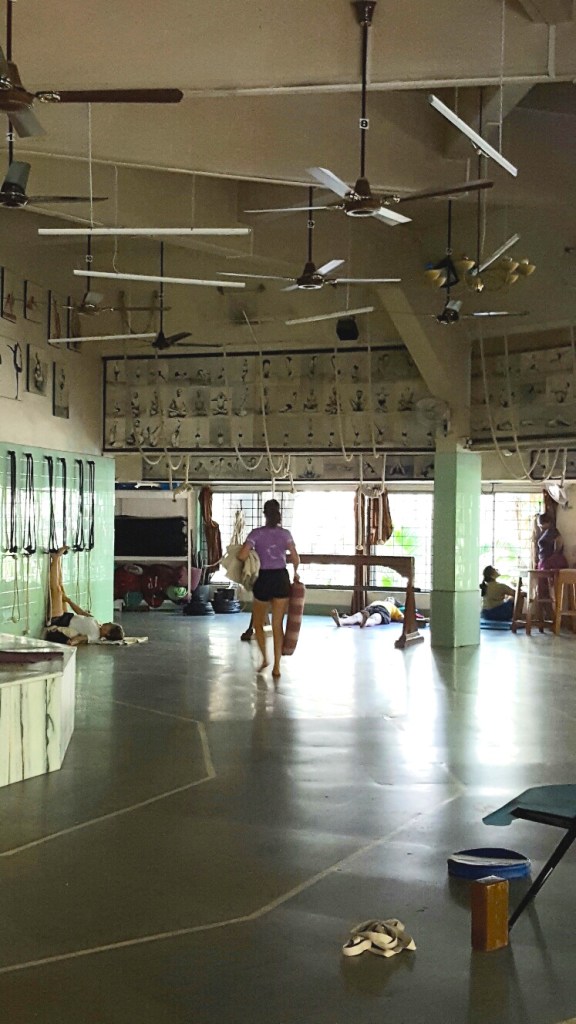
The Practice Hall at RIMYI in Pune.

10) Do not experiment on others. Learn to be a student before becoming a teacher. An art cannot be mastered in a day, or a week or a month

Protecting Your Immunity: Stress and Breathing Techniques

Unless we want to live in a bubble, what can we do to protect ourselves?

1. The relationship between emotional stress and the depletion of the immune system.  The research shows how the immune system appears to benefit from the practice of yoga, and other activities which harmonise the mind/body/spirit. These forms of training encourage ‘coherence’, as opposed to ‘chaos’, in the rhythm of the heart beat. Immunoglobulin A (IgA)  is the body’s front line defence against infectious agents. It is present in all the mucous membranes of the body. When volunteers were asked to recall an occasion when they became stressed or angry, thus inducing a chaotic heart rhythm, the secretions of IgA dropped for an average of 6 hours. Negative emotions appeared to have a negative effect on their immunity, unless the volunteers had learned how to induce ‘coherence’. Research showed that those who had learned simple techniques for quietening their heart and brain through yogic breathing techniques could maintain coherence in the heart rate, and thus reduce the likelihood of a drop in their IgA levels. For more breathing techniques, click HERE.

2. How sweating works – when sweat glands are stimulated to increase production, they secrete a substance (sweat) which is synthesized from the fluid which fills the spaces between our body’s cells (the interstitial spaces). This fluid comes from blood plasma leaked into the tissues by capillaries. Any circulating toxins present in the blood system are carried into the interstitial spaces along with the plasma. In this way toxins make their way into sweat, which is a filtrate of the plasma. Heat stress and exertional activities speed up the circulation of blood and thus accelerate the release of fluid into the interstitial spaces. This in turn prompts sweat glands to produce more toxin-laden sweat.

Most people living in modern times do not sweat very much. Lack of adequate exercise, the prevalence of climate control technology at home and in the workplace, and the non-physical nature of most jobs contribute to minimal sweating. Unfortunately, decreased sweating means decreased toxin removal -so get moving!

3. Other supplements which can be helpful:

  • Bee Pollen – a wonder of Nature, but in the light of the current crisis in the bee population, and simply because of the massive amount of energy required for a bee to produce one single grain, I would counsel against using it, and if you do, to use it mindfully.
  • Citrus seed extract – there seems to be a lot of controversy surrounding the purity of the extract, and therefore the possibility of allergic reactions. If you do use it, check that it is cold pressed and extracted without using chemicals, or better still collect up your grapefruit pips and make your own!
  • Garlic – if you can hold a peeled garlic clove between your cheek and teeth for 20 minutes, 3 times a day, you are welcome! Seriously though, fresh raw garlic can halt a viral infection in its tracks but needs to be taken 3 times a day. Taken at the first signs of cold or flu, good quality garlic  perles may also help.
  • Pep up your food – fresh ground black pepper is a diaphoretic. It opens up the pores for sweating and is helpful at the onset of colds and flu. Keep it on the table and use it every day.

4. Books:

  • For the body – Healing With Whole Foods by Paul Pitchford.
  • For the mind and emotions – Healing Without Freud or Prosac by Dr David Servan Schreiber.

5. For a quick and easy guide to sprouting your seeds at home, this short video is fun!

Colds & Flu – Notes

Unless we want to live in a bubble, what can we do to protect ourselves?

1. The relationship between emotional stress and the depletion of the immune system.  The research shows how the immune system appears to benefit from the practice of yoga, and other activities which harmonise the mind/body/spirit. These forms of training encourage ‘coherence’, as opposed to ‘chaos’, in the rhythm of the heart beat. Immunoglobulin A (IgA)  is the body’s front line defence against infectious agents. It is present in all the mucous membranes of the body. When volunteers were asked to recall an occasion when they became stressed or angry, thus inducing a chaotic heart rhythm, the secretions of IgA dropped for an average of 6 hours. Negative emotions appeared to have a negative effect on their immunity, unless the volunteers had learned how to induce ‘coherence’. Research showed that those who had learned simple techniques for quietening their heart and brain through yogic breathing techniques could maintain coherence in the heart rate, and thus reduce the likelihood of a drop in their IgA levels. For more breathing techniques, click HERE.

2. How sweating works – when sweat glands are stimulated to increase production, they secrete a substance (sweat) which is synthesized from the fluid which fills the spaces between our body’s cells (the interstitial spaces). This fluid comes from blood plasma leaked into the tissues by capillaries. Any circulating toxins present in the blood system are carried into the interstitial spaces along with the plasma. In this way toxins make their way into sweat, which is a filtrate of the plasma. Heat stress and exertional activities speed up the circulation of blood and thus accelerate the release of fluid into the interstitial spaces. This in turn prompts sweat glands to produce more toxin-laden sweat.

Most people living in modern times do not sweat very much. Lack of adequate exercise, the prevalence of climate control technology at home and in the workplace, and the non-physical nature of most jobs contribute to minimal sweating. Unfortunately, decreased sweating means decreased toxin removal -so get moving!

3. Other supplements which can be helpful:

  • Bee Pollen – a wonder of Nature, but in the light of the current crisis in the bee population, and simply because of the massive amount of energy required for a bee to produce one single grain, I would counsel against using it, and if you do, to use it mindfully.
  • Citrus seed extract – there seems to be a lot of controversy surrounding the purity of the extract, and therefore the possibility of allergic reactions. If you do use it, check that it is cold pressed and extracted without using chemicals, or better still collect up your grapefruit pips and make your own!
  • Garlic – if you can hold a peeled garlic clove between your cheek and teeth for 20 minutes, 3 times a day, you are welcome! Seriously though, fresh raw garlic can halt a viral infection in its tracks but needs to be taken 3 times a day. Taken at the first signs of cold or flu, good quality garlic  perles may also help.
  • Pep up your food – fresh ground black pepper is a diaphoretic. It opens up the pores for sweating and is helpful at the onset of colds and flu. Keep it on the table and use it every day.

4. Books:

  • For the body – Healing With Whole Foods by Paul Pitchford.
  • For the mind and emotions – Healing Without Freud or Prosac by Dr David Servan Schreiber.

5. For a quick and easy guide to sprouting your seeds at home, this short video is fun!

6. AND FINALLY, THE DISCLAIMER –

These are all my own thoughts and words on the subject. They are not necessarily those of the suppliers of any of these products. I believe that positive thoughts and positive actions lead to positive outcomes. Let me know how you get on!

Granola – the staff of life.

  • Download the recipe HERE.

This is a modification of a great recipe served at the sumptuous brunch on one of our yoga holidays in Portugal. It was meant for the few wheat-free guests, but quickly became a favourite with everybody. It will set you up for the day, and is a great alternative for a tea-time snack. I have modified it to lower the GI, and make it more sustaining by improving the protein content. The quinoa and oats are a great blend. Buy organic nuts – you really can taste the difference. The muscovado is important for the trace elements in the molasses. (You could use a tablespoon of molasses melted into the hot water instead. It makes the granola much darker.) The goji berries are a beautiful colour, and either prunes or apricots have a low GI. Simply snip them into small pieces with kitchen scissors. If you like a toasted flavour, put it under a grill for a few minutes, but don’t leave it – you’ll burn your nuts and have to start all over again!

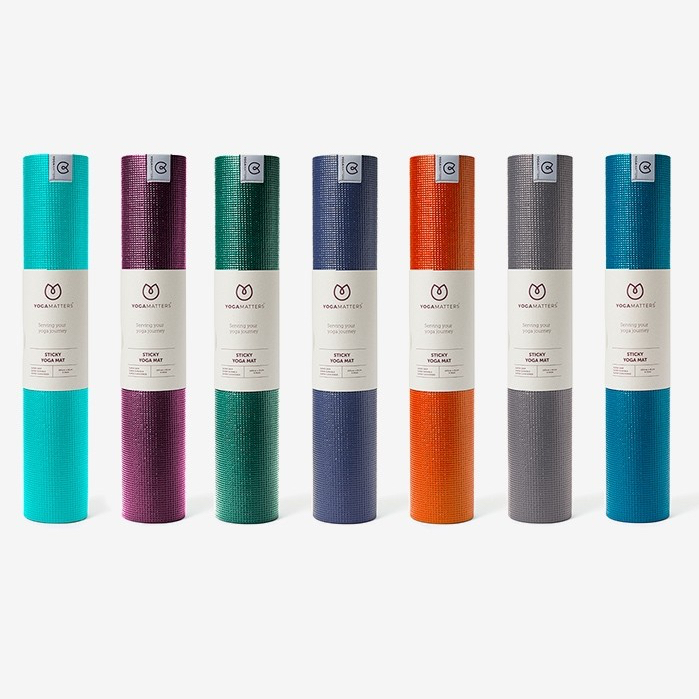
Creative Uses for Old Yoga Mats

We have wooden floors at home. They look lovely, but bath mats and rugs are lethal! I have cured the problem using several old yoga mats as thin, soft underlay for the rugs. Old mats are also useful when cut to fit the footwell in the car, for keeping your car floor mud and dust free.

Thanks to the team at Yogamatters for these other ideas:

1. Donate to homeless shelters for extra padding to sleep on.

2. Donate to an animal rescue centre such as RSPCA. Most

of these places need soft, durable mats, rugs, towels, & blankets to line

crates.

3. Use it on the beach instead of a towel.

4. Or as a draught excluder – plug up draughty windows and doors to save

energy and keep warm.

5. A door stop – cut bits out and fold over to fit the gap under your door.

6. Old mats can be used for pet’s beds – they insulate from a cold

hard floor and protect the floor from any straying paws.

7. You could make waterproof cushions for outdoor events: easy to store,

lightweight, washable, reusable, and comfortable. Cut the mat into

equal pieces to make the top and bottom (the size of a newspaper laid

flat). Next, punch holes every 2 inches all the way around (both top and

bottom). Then, take a couple of newspapers and lay them between the

top and bottom. Use string, twine, ribbon, etc. to lace the holes and tie

off. To re-stuff, untie and add new newspaper.

8. Cut to fit wardrobe floors or place by the front door as a place for

muddy shoes.

9. Cat scratching post – roll the mat up tightly and fasten with string. You

can also use a section as a protective pad for your floor by the cat’s

litter box.

10. Play time – use a sharp knife or scissors to cut out shapes, letters,

numbers, etc. Great for children to play and learn with. Cut holes to

create masks, hats, costumes and props…the possibilities are endless!

11. If going on a car journey with your dog, roll an old yoga mat out over

the back seat. This ensures that your dog is comfy and can practice

the original Downward Dog without scratching your seats!

12. Get rid of weeds in your garden without using chemicals. Just place the

mat over a section of your garden and the mat combined with the sun’s

heat will smother weeds and their seeds. When it’s time to sew new

seeds just remove the mat and move it to another spot in your garden.

13. If you are camping in bad weather, you can use the mat as a door mat

outside your tent. It’s a great way to take your shoes off and kneel

down to get into your tent without getting muddy.

14. Or Place it under your sleeping bag for extra padding when camping.

15. Make garden knee pads – cut the mat into even sections and bind the

ends with string or twine.

16. When doing DIY, use an old mat to keep materials from sliding on your

workbench while using power tools on them.

17. Cut it up and decorate as you like to make original eco-friendly mouse

pads.

18. Cut into strips and use for drainage in flower pots.

19. Use it in your car as a sunscreen when it’s really hot.

20. Keeping an old mat in the car is great for those spur of the moment

picnics, keeping groceries from sliding around in the boot!